Get Email Updates
Get an email the instant your dream home hits the market with your MyLogin account
Updated September 16, 2026 10:54AM EST




25 APR
If you’ve been reading headlines about Florida’s homeowner’s insurance market, you’ve probably seen some alarming news. Carriers leaving the state. Premiums climbing. Policies are being non-renewed mid-term.
Here’s the honest take: it’s a real challenge. But it’s a manageable one , especially when you understand how the market works and what factors you can actually influence. Buyers who come in prepared make smarter purchasing decisions and often pay significantly less for better coverage.
Florida’s insurance market has been shaped by decades of hurricane activity, a historically litigation-heavy claims environment, and a concentration of coastal risk that makes the state uniquely expensive to underwrite. Many national carriers have exited or significantly reduced their Florida exposure, which means the carrier you use in your current state almost certainly won’t write a policy on a Florida home.
You’ll be starting fresh with Florida-licensed carriers. The sooner you engage with this process, the better. Insurance complications have delayed and occasionally killed closings when buyers waited too long.
Citizens Property Insurance Corporation is Florida’s state-backed insurer of last resort. When private market carriers won’t write a policy on a specific property, Citizens steps in.
This sounds like a reliable safety net, and in many cases it is, but there are important limitations. Citizens policies can be ‘depopulated,’ meaning transferred to a private insurer without your proactive consent. Coverage options are more limited than competitive private market policies. And because Citizens is a government entity, its long-term financial stability in a major storm year is a legitimate policy discussion.
Citizens is a viable option in many situations, but it shouldn’t be assumed to be the only one. A local insurance professional can help you evaluate whether private market alternatives exist for your specific property.
Understanding what insurers look at empowers you to shop intelligently and to evaluate properties with insurance costs clearly in mind:
Roof age and type: A newer metal hip-style roof can generate thousands of dollars in annual savings over an older flat or shingle roof. Some carriers won’t write policies on roofs over a certain age at all.
Hurricane protection: Impact glass generates the largest discounts. Accordion shutters come next. Metal panel shutters are effective but less favorable with insurers. The type and completeness of your opening protection significantly affect your premium.
Construction type: CBS (concrete block stucco) construction is preferred over frame and typically generates better rates.
Location and flood zone: Proximity to water, elevation, and flood zone designation all affect coverage options and costs, and flood insurance is typically separate from homeowner’s insurance.
A wind mitigation inspection is a specialized assessment of a home’s hurricane resistance features, roof shape, roof-to-wall connections, roof deck attachment, and opening protection. Insurance carriers use the results to calculate premium discounts.
The inspection costs a few hundred dollars and can save multiples of that amount annually. For homes with strong wind mitigation features, particularly newer construction with impact glass and a hip roof, the discount can be substantial. Echo Fine Properties routinely recommends scheduling this inspection as part of the buying process, not as an afterthought after closing.
This is one area where local consistently beats national. Florida-specific and regional carriers understand the market, know the properties, and have established local contractor relationships for claims resolution. National carriers that still write in Florida often do so with restrictions and limitations that only become apparent at claims time.
A local insurance agent who specializes in Southeast Florida properties is genuinely valuable, not just for finding the right policy, but for advocating on your behalf when something goes wrong. A toll-free claims line is not the same thing.
Insurance is not a checkbox to handle a week before closing. For properties with older roofs, unique construction, or locations in higher-risk flood zones, obtaining coverage can require weeks of searching, inspections, and carrier negotiations.
Your lender will require proof of insurance before funding the loan. If you haven’t secured a policy in time, closing gets delayed. Echo Fine Properties connects buyers with trusted local insurance professionals early in the transaction, so this never becomes a last-minute problem.
Florida’s insurance market is complex, but with the right guidance, it’s entirely navigable. The buyers who fare best are those who engage with the process early, work with local specialists, and evaluate properties with insurance costs clearly factored into the total cost of ownership.
Echo Fine Properties can introduce you to trusted insurance professionals who specialize in Southeast Florida.
You can learn more through our home economics buyer’s guide or contact us today to start having conversations with the real estate experts.
It varies widely based on property characteristics, location, coverage levels, and carrier. A broad range for typical residential properties runs from roughly $2,000 to $8,000 or more annually. Waterfront homes, older properties, and high-value homes can be significantly more.
A specialized assessment of a home’s structural features that affect hurricane resistance. The results are submitted to your insurer for a potential premium discount, often hundreds to thousands of dollars annually. It’s one of the best-value investments a buyer can make before closing.
In most cases, no. Most out-of-state carriers don’t write homeowner’s policies in Florida. You’ll need to establish new coverage with a Florida-licensed carrier, ideally before you’re within two weeks of closing.
No. Standard homeowner’s insurance in Florida does not cover flood damage. If your property is in a flood zone, or even if it isn’t, since many flood claims come from properties outside high-risk zones, a separate flood insurance policy is strongly advisable.
1. How to Tell Your Realtor What You Really Want: The Buyer Consultation Process in South Florida
2. The Home Buying Process in Southeast Florida: A Step-by-Step Guide for Every Buyer
3. What to Know About Southeast Florida Homes: Construction, Features, and Product Knowledge
4. How to Set Up the Perfect Home Search in Southeast Florida (And Never Miss a Listing)
5. Cash vs. Mortgage in Southeast Florida: Financial Strategies Every Homebuyer Should Know
6. Homeowner’s Insurance in Southeast Florida: What Every Buyer Must Know Before Closing
7. Planning Home Showings in Southeast Florida: What to Expect and How to Prepare
8. What Your Buyer’s Agent Actually Does When They “Physically Go Look”
9. Buying a Foreclosure or Short Sale in Southeast Florida: What You Really Need to Know
10. When the Home Search Takes Longer Than Expected: How to Stay the Course in Southeast Florida
11. How to Price a Home Offer in Southeast Florida: Strategy Before You Write the Contract
12. How to Negotiate a Home Purchase in Southeast Florida: From First Offer to Final Deal
13. When to Walk Away From a Home Deal in Southeast Florida (And How to Do It)
14. Your Offer Was Accepted in Southeast Florida: Now What? A Post-Acceptance Checklist
15. Pre-Closing Checklist for Southeast Florida Homebuyers: Don’t Let the Finish Line Trip You Up
16. The Final Walk-Through Before Closing in Southeast Florida: What to Check and Why It Matters
17. What to Expect on Closing Day in Southeast Florida: A Complete Guide for Buyers
18. Life After Closing: How Your Southeast Florida Realtor Can Still Help You After the Sale

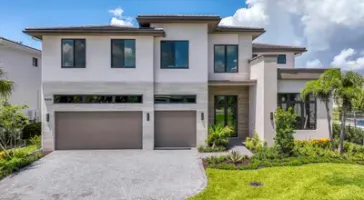
6 Beds | 6/1 Baths
Contact Craig at ..
Offered at $2,995,000
More Info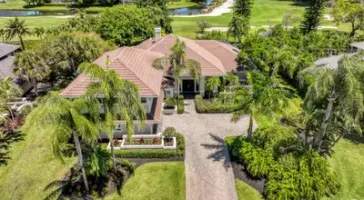

3 Beds | 2/1 Baths
Contact Andrea at ..
Offered at $1,600,000
More Info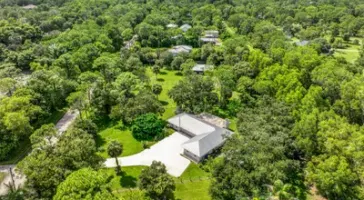
3 Beds | 3 Baths
Contact Sophie at ..
Offered at $1,374,990
More Info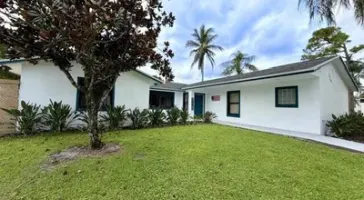
3 Beds | 2/1 Baths
Contact Patricia at ..
Offered at $724,999
More Info








or Create your MyHomes account today?

In only 30 seconds you will have full access to property, community info and SOLD data you can't get anywhere else.