










Get Email Updates
Get an email the instant your dream home hits the market with your MyLogin account
Updated September 16, 2026 10:54AM EST





02/03/2026
Jeff Lichtenstein
Feb 03, 2026

My mom says I was a good toddler. “Give Jeff some playdough or a stick and he would be fascinated for hours.” Either I was very creative or quite slow. For self-preservation purposes, let’s go with the creative part. Computer geeks are proud to be called Computer Geeks. As someone who enjoys the creative process, I fashion myself as a Creative Nerd.
You may or may not have noticed some new design looks throughout our website and some of our messaging that we are in the process of rolling out. This Jeff’s Journal is about that Creative Process. It can apply to any creative process. It’s one that we recently spent a great deal of time on. It involves a lot of history and then goes into new AI technology applications. To me it was fascinating and something I wanted to share. Some of you might find it interesting and others a bore. So, to be courteous, you now have the #1 disclaimer. (There will be 5 disclaimers scattered about in this piece). If a bore, go get some extra Sunday morning shut eye, or watch whatever the Sunday morning political talking heads are blabbering about if you need a bit of self-inflicted pain.
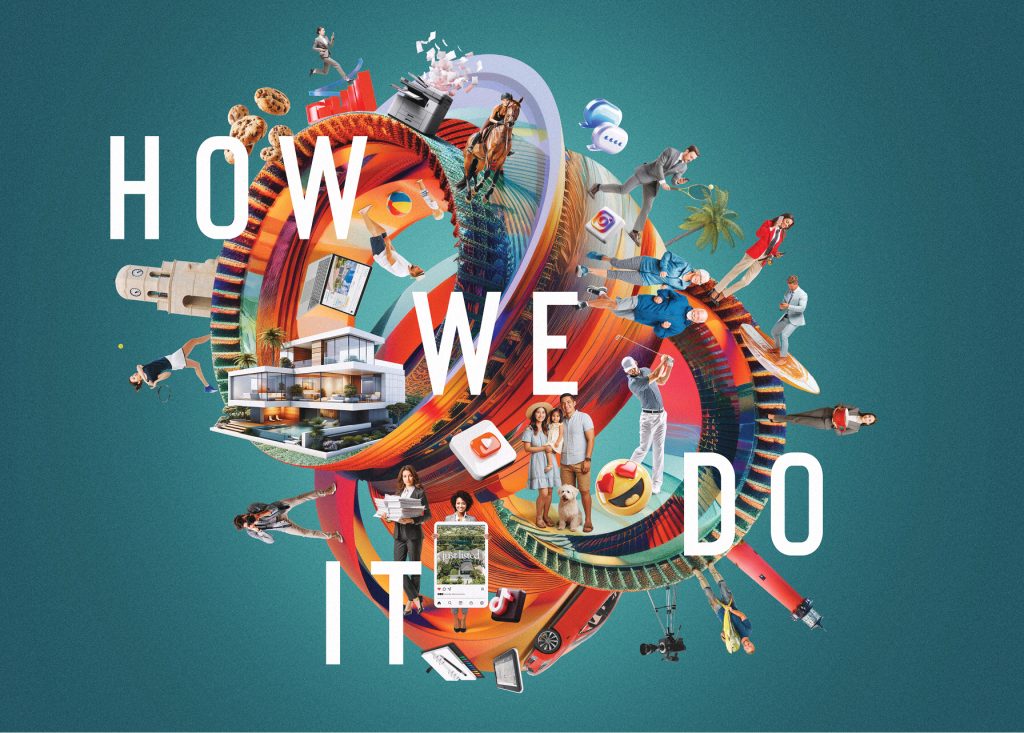
The #2 disclaimer is I’ll be going into the weeds with this. My apologies for wasting time on the previous two paragraphs and feel free to move on. For those of you who are creative nerds or interested in the process, here we go….
The creative process, I believe, is born on building blocks and lots of diversity and life experiences. You also must have a bit of an any-road-will-take-you-there mentality. Be open with your own curiosity to explore what you are interested in. Things you learn at seven years of age might help you move past a creative problem at 57 years of age. There is a terrific audio book, Miracle and Wonder, that Malcom Gladwell produced studying the creative process and featured the musician Paul Simon. It’s a study on why someone like Simon or Frank Lloyd Wright is creative continuously throughout life whereas others flame out. Plus, the music is fantastic.
For me, I majored in marketing although I can’t recall much of what I learned. Rather much of my education was from either storytelling, sports, work, life, and probably dumb practical jokes with friends. Being a White Sox fan, the team was always creative with promotions. They once brought in Eddie Gaedel, a 3-foot-7 circus performer to the plate. He was walked on 4 straight pitches as the strike zone was too small. An exploding scoreboard. A contortionist first base coach and playing in shorts were just some of the creative antics to bring in fans.
At Western Textile where I worked in the 1990’s, we once had a problem with getting across that we went upscale in our product line. When I first started, our longtime clients called us knockoff artists as much of what we produced in fabric lines was a version of something our competition did. We just gave better service along with quality and delivery. Then we hired a top creative artist to lead the studio. I witnessed the difference in thought. Never copy your direct competition. Worry about yourself. Listen to the customer and your salespeople but don’t involve them in the creative process (too many cooks in the kitchen rule). Let the Creatives calibrate. Someone has to be the leader and make the final decision. Also, something my dad said, “give the Creatives their head”. Meaning, let them experiment – as having that freedom can lead to out of the box results. Being exposed to that mindset is incredibly freeing. We then wanted to get the point across to our clients quickly who for years looked at us as copycats. Wearing tuxedos for the entire season to visit each client along with bringing champagne was a creative solution that transformed us iimmediately into a luxury leader.
Last year I had two goals for our business. The first was our navigation on the Website. The Website has so much detail that it was hard to find information. The second goal was to put together an elevator pitch and explain what we do as a company. ECHO is a different model – because the company is paying for the marketing (not the agent), we end up doing much more for the client than they would normally get. But the client sells once a decade and often doesn’t really understand the marketing process.
1. Navigation Problem
A solution came in the form of storytelling which was based on a previous marketing piece of two Buyer Guides. The first was called Nobody Reads This (151 critical parts of the buying process). Nobody Reads This is an important piece that showcases all the things a Buyer’s Agent does for a client. Nobody would want to read it so we put up a challenge to the Buyer by calling it Nobody Reads This. It’s basically saying to the reader, you can’t read this, and sparks curiosity. We then did a companion piece called Everybody Reads This. Everybody was less wordy and more of a Wizard of Oz/Candyland storytelling of 18 distinct parts of the purchasing process. If you peruse the website on desktop, you will see the dropdowns limited to Buying, Selling, Communities and Menu. Each one expands and pictures then lead the way to help you navigate through. Much more powerful than a drop down of 20 items in text. We will be rolling out a similar solution to the mobile site shortly. That Wizard of Oz/Candyland Process was part of the solution of our Navigation and would also factor into our 2nd problem, the Elevator Pitch.
2. Elevator Pitch Problem
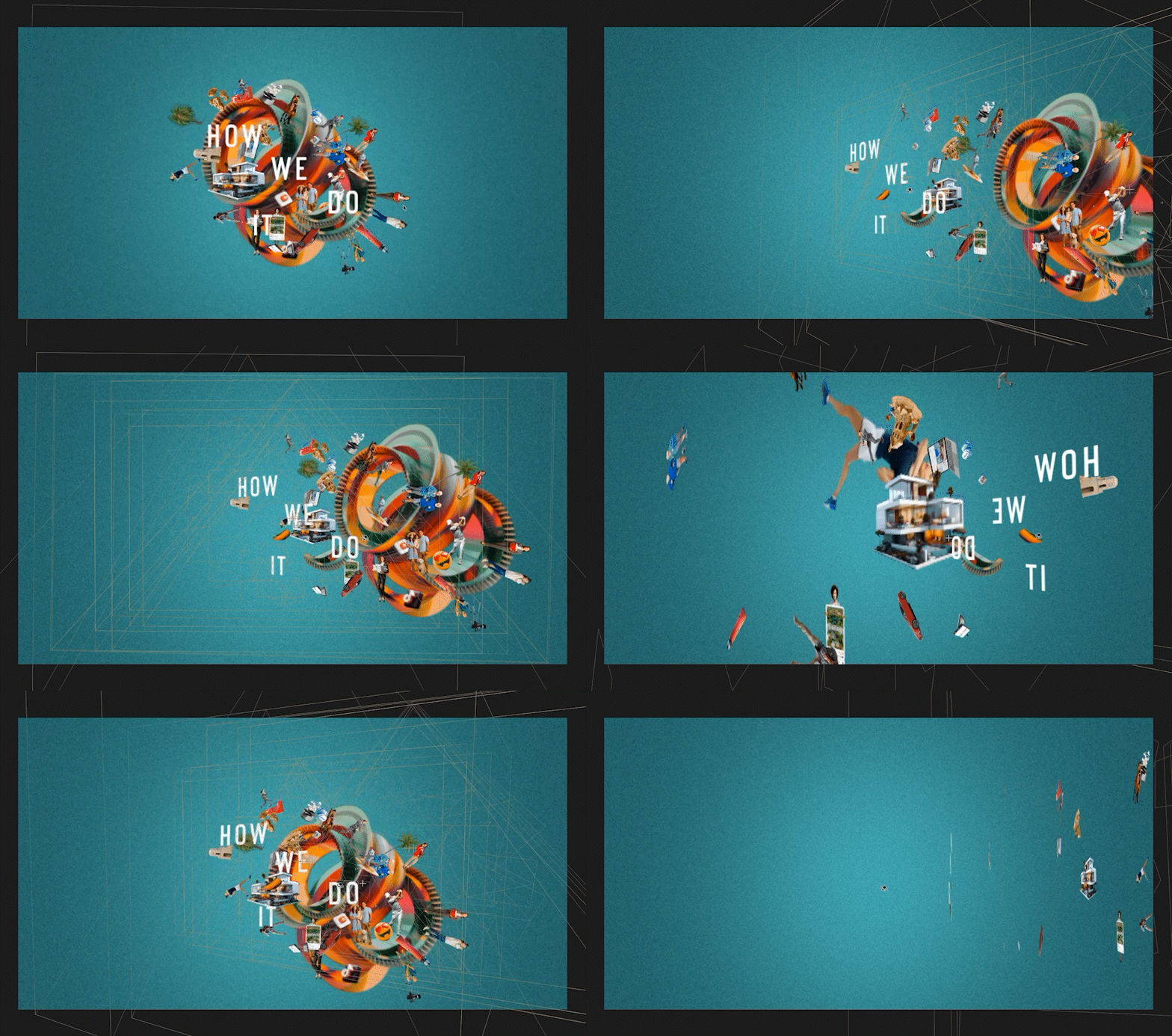
Again, the problem here is twofold. First, the end consumer (you) doesn’t understand how the real estate brokerage industry works. The average consumer shops or sells a home every 11 years. When purchasing something on Amazon or even an automobile, you have a better feel of what to look for. How de we explain our massive advantage of having an internal lead generation department that most brokerages don’t have? Or our international reach? The name orgin of our company? Awards (Best Brokerage of 2025)? Testimonials (over 1300). And an unheard of promise of a 57 point guarantee that only we are able to achieve because of our unique setup? As an example, a Matterport walk through tour (which increases showings by 30%) is not a household name and might not have been invented the last time you sold. Nor do you probably care how the marketing is paid for (you probably assume the company – which is incorrect – except in the case of ECHO). ECHO always does a Matterport and ECHO pays for the marketing. Both are big advantages for the client and that guarantee of the Matterport happens because ECHO is paying for it. So, explaining all of that and achieving it in a striking way that tells an interesting story was not so easy. Our agents weren’t even sure where to begin because of the myriad and bredth of what we do compared to any of our competition.
We have a website page and a 20-page brochure called, “How We Do It”. However, it showed all the things we do but it didn’t tell a story, and it was not in an elevator pitch format. What follows is how we came up with a new design deck that tackled all of this.
#3 Disclaimer – I’m usually chuckling or laughing while writing these missives. Not on this one. I hope I’m not losing you.
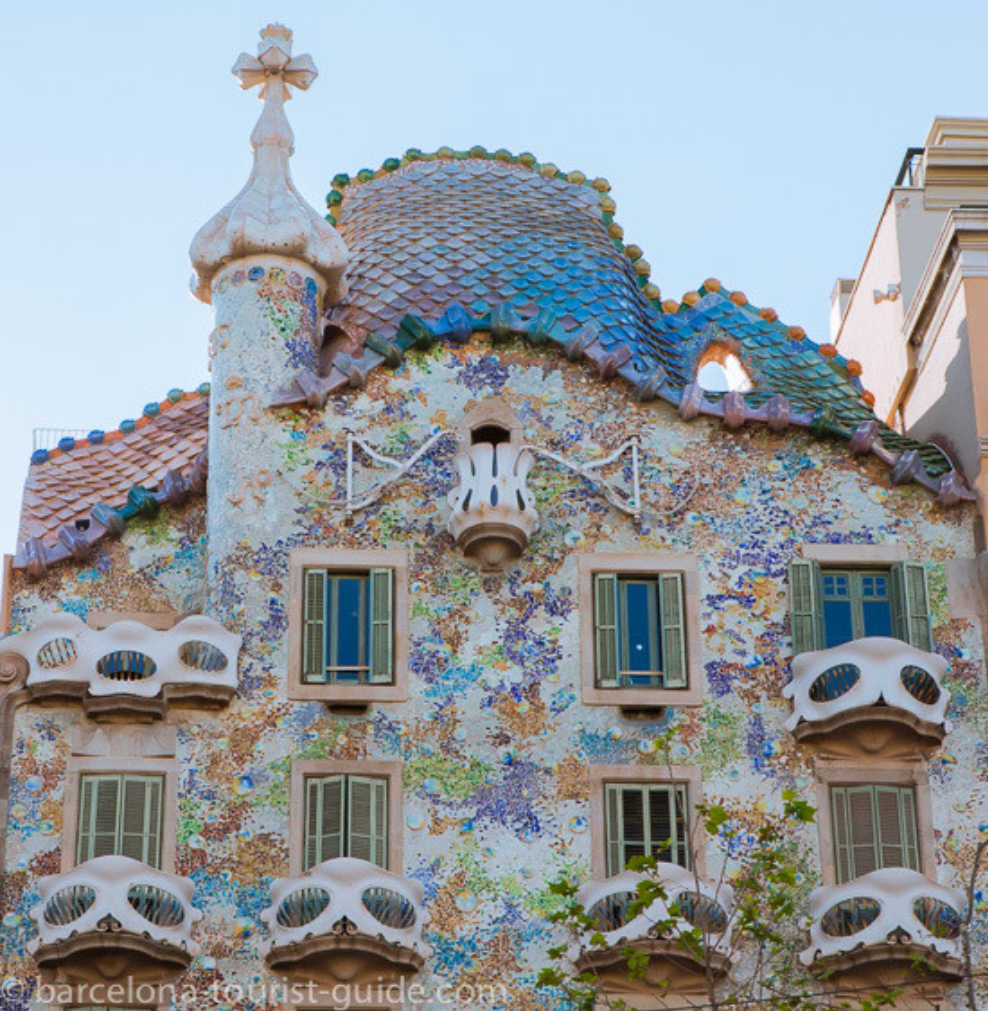
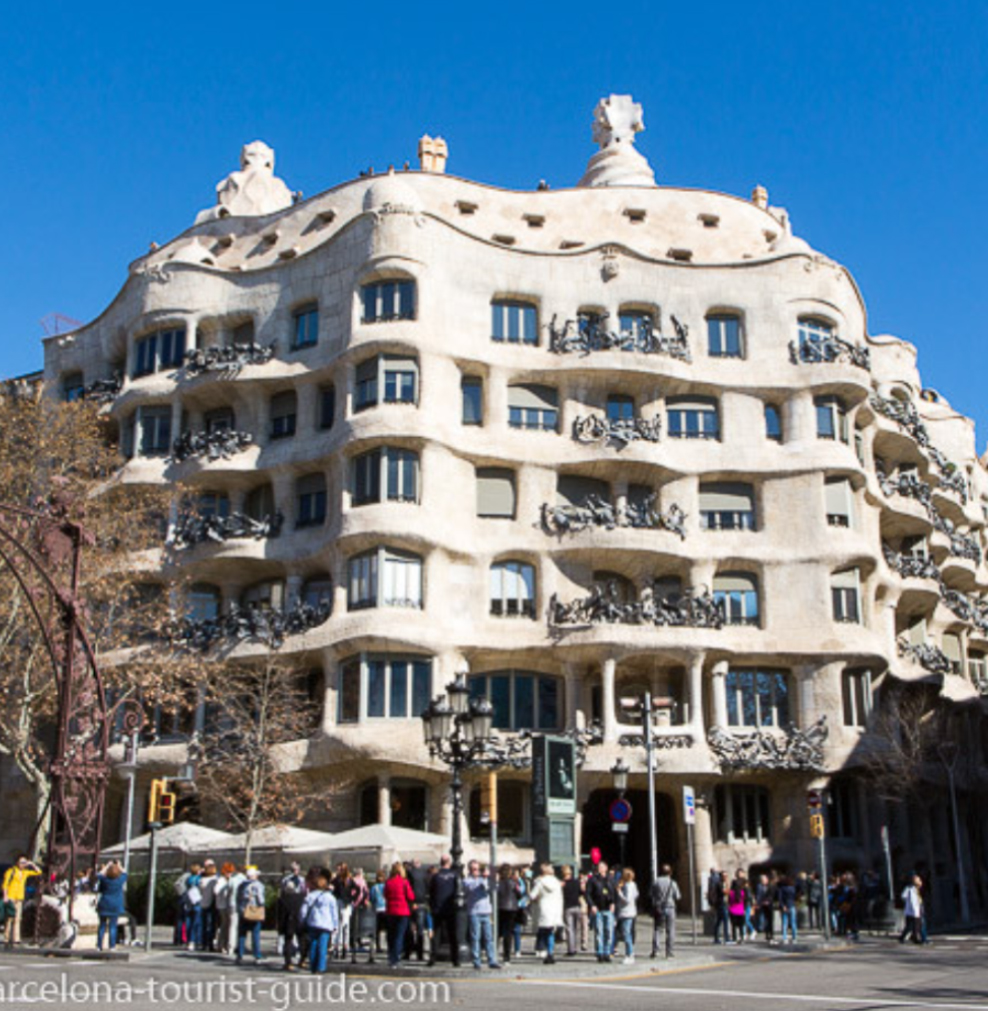

My wife and I celebrated our 30th wedding anniversary in Portugal and Spain. We spent extra time in Barcelona as we heard how beautiful a city it was. Some master artists sparked an idea.
a. Picasso & Miro
The Picasso & Miro museums in Barcelona are fantastic. Both artists are world renowned who created priceless original art. Picassos father was disappointed that he didn’t follow creating what other masters before him did. Instead, they both broke molds. Miro helped design his own museum. One of the things I found interesting about both Museums is that they went in chronological order and told a story. The Miro Museum literally started at one and went through number 71. So, it was like following the yellow brick road. Each told a story from beginning to end.
b. Gaudi.
As stated, I had heard Barcelona was considered by many the most beautiful city in the world and it didn’t disappoint. The three Gaudi homes followed by the Gaudi Park and the Gaudi Church (still under construction) were the highlights. They were all unique. One completely different from the rest. His masterpiece was devoid of color and Gaudi was actually sued by his client because he was expecting a home full of color. Think about that. The owner was angry because they wanted a knockoff and instead got something unique which is considered a masterpiece. It’s mind blowing to think how short sighted that owner was.
#4 Disclaimer – Do you think this is boring? As Sally Field once said in the Academy Awards – “Do you like me?” Can’t worry about that. I’m going to go grab a cup of tea and soldier on.
Barcelona brought me back to my roots in marketing. Be original like Gaudi. Tell a story like Miro. Taking all of that we started over with design.
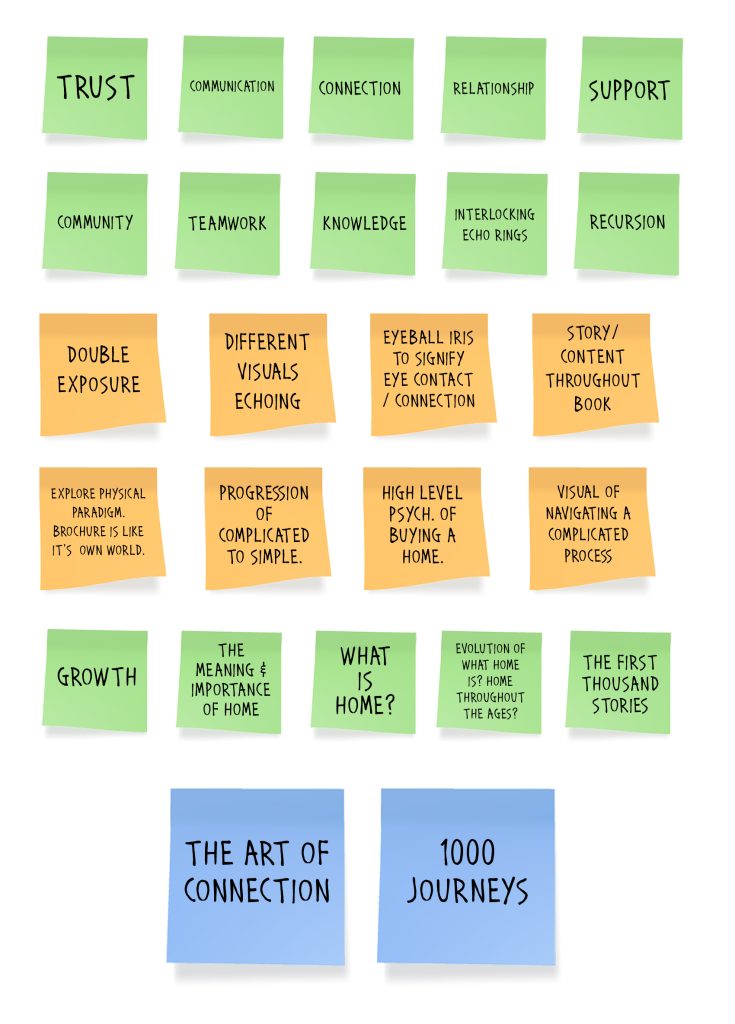
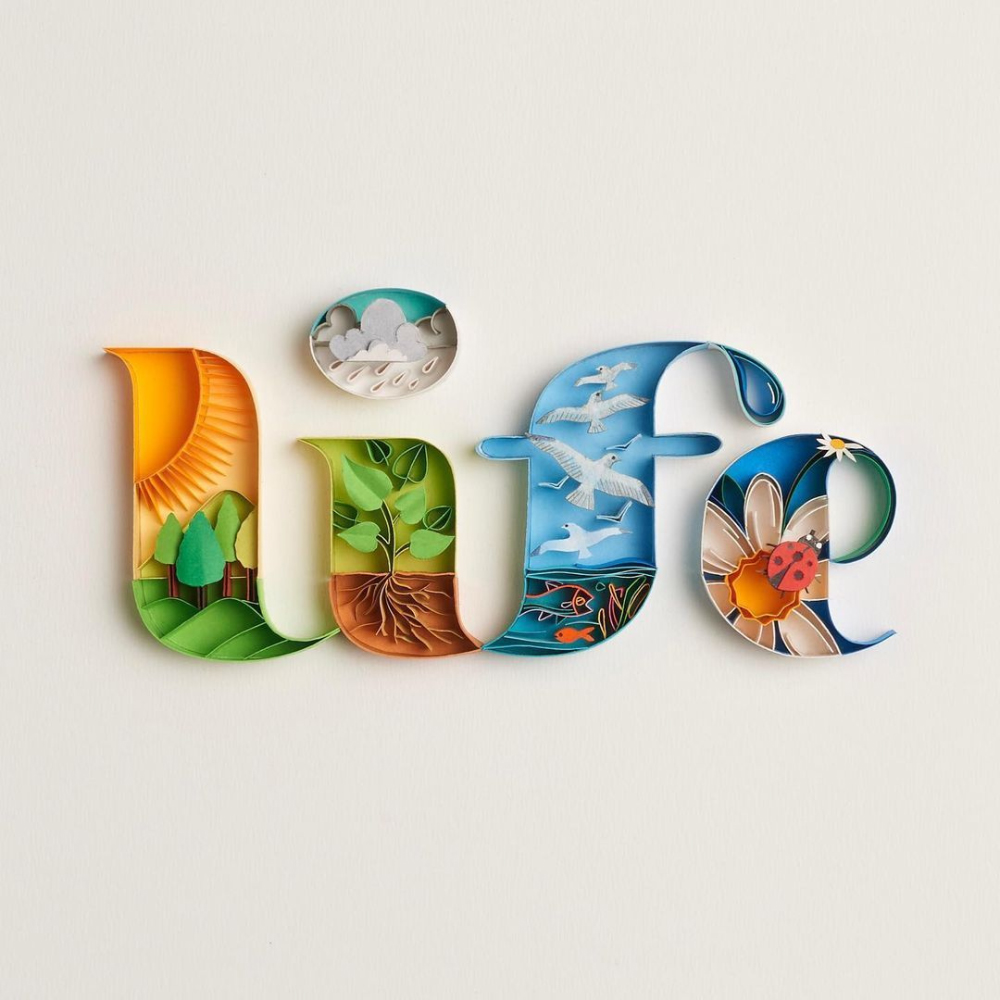









Our Creative director than took this maddening feedback and crafted 5 separate designs.
Concept A – Connection
Explorations of Key Visuals

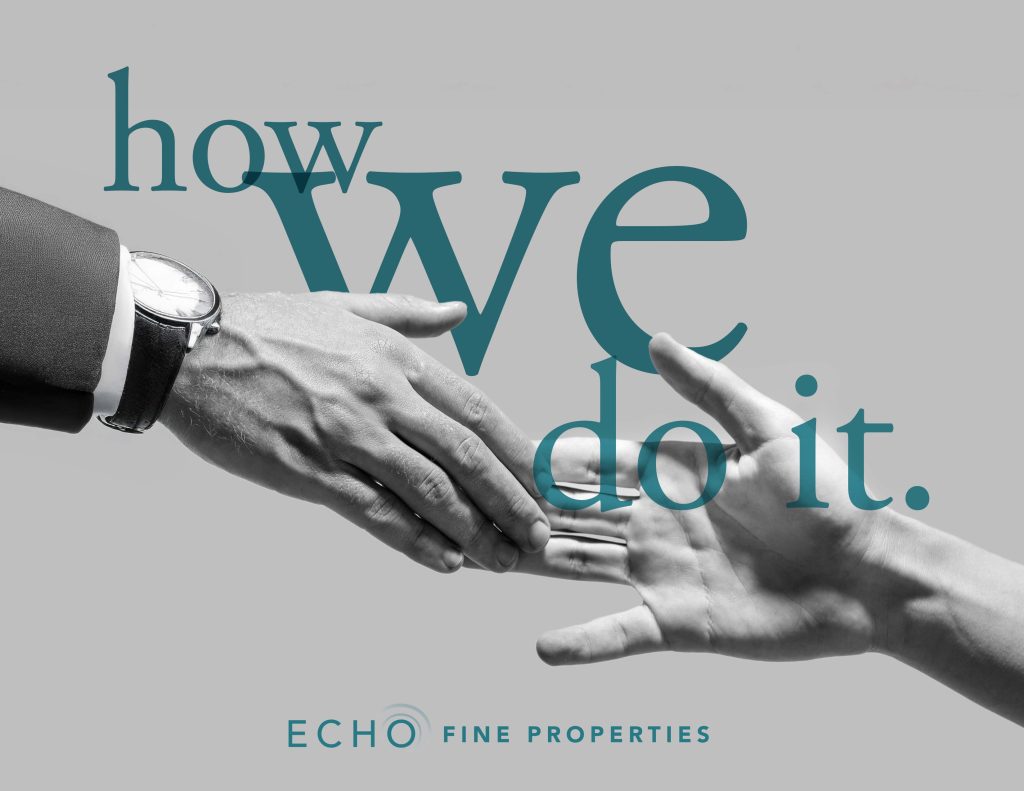


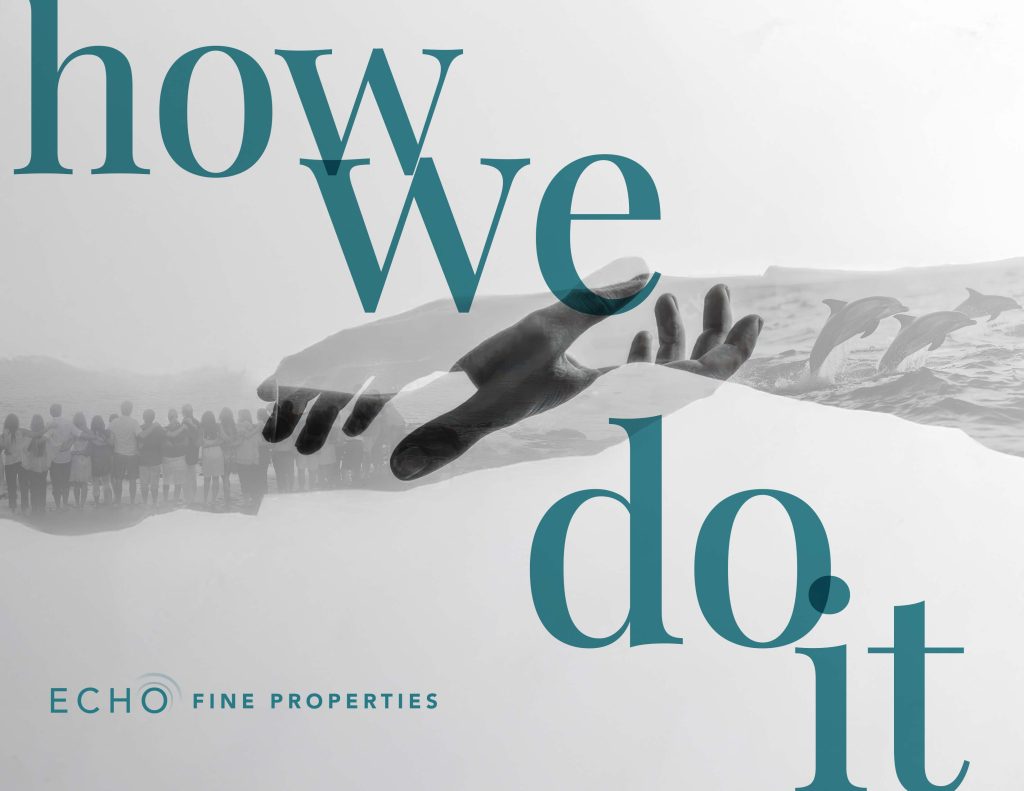
Elements and words I liked. Getting a deal done and the layout for “How We Do It” were good.

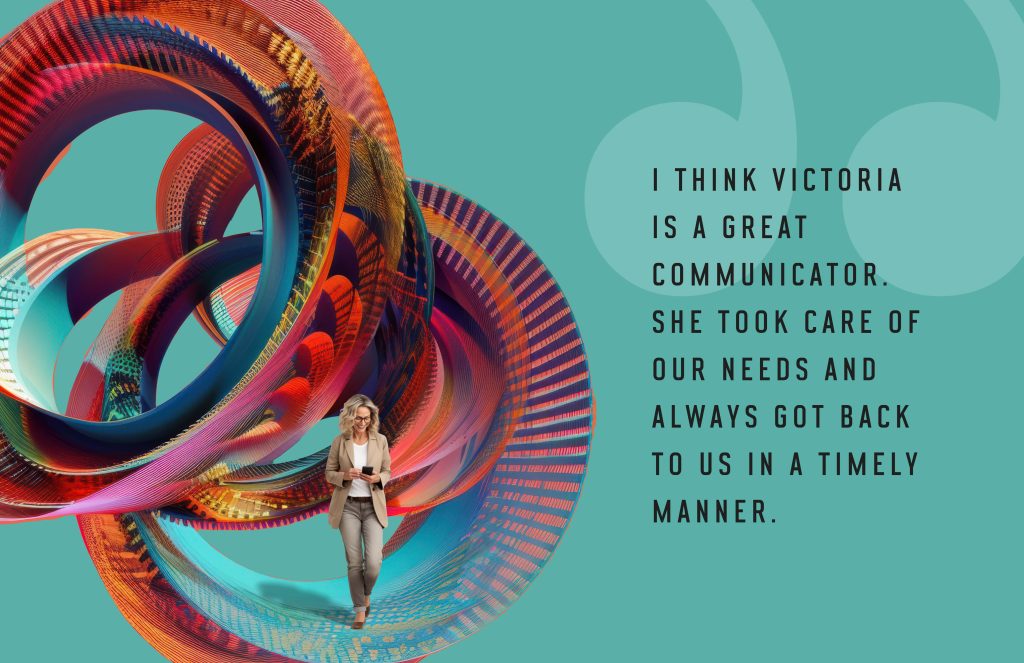

The gears of transaction. This showed how complicated it was and visually different.


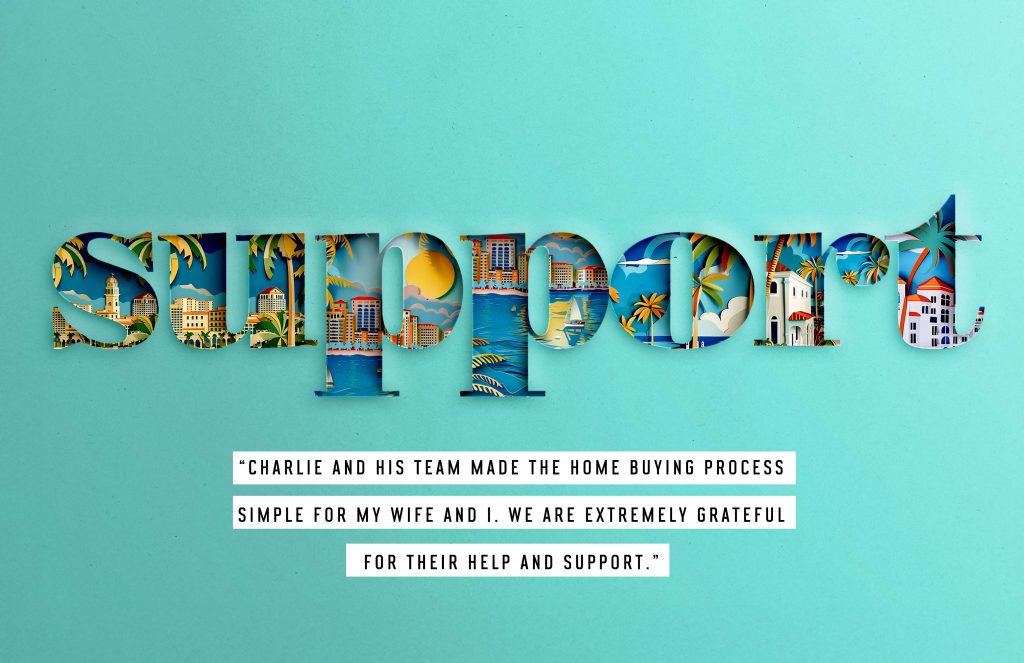
I liked that elements like the Palm Beach Clocktower and Jupiter Lighthouse could be displayed inside of words. The look was not different enough though as an overall theme.
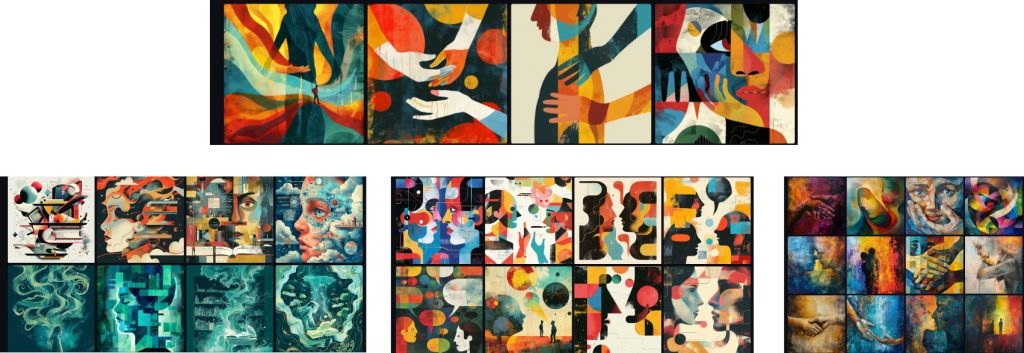
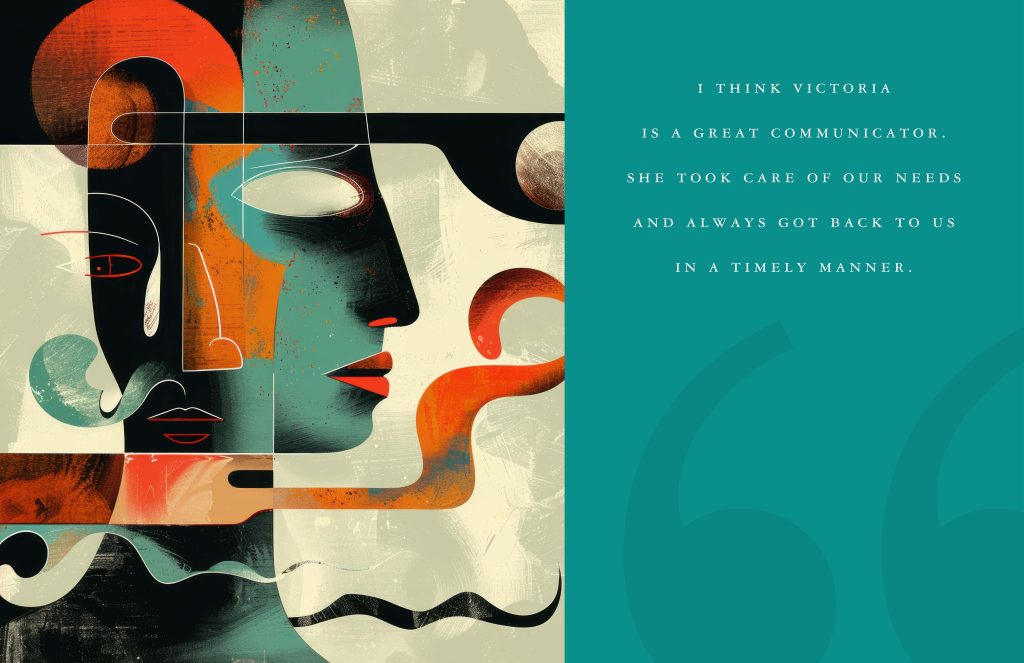
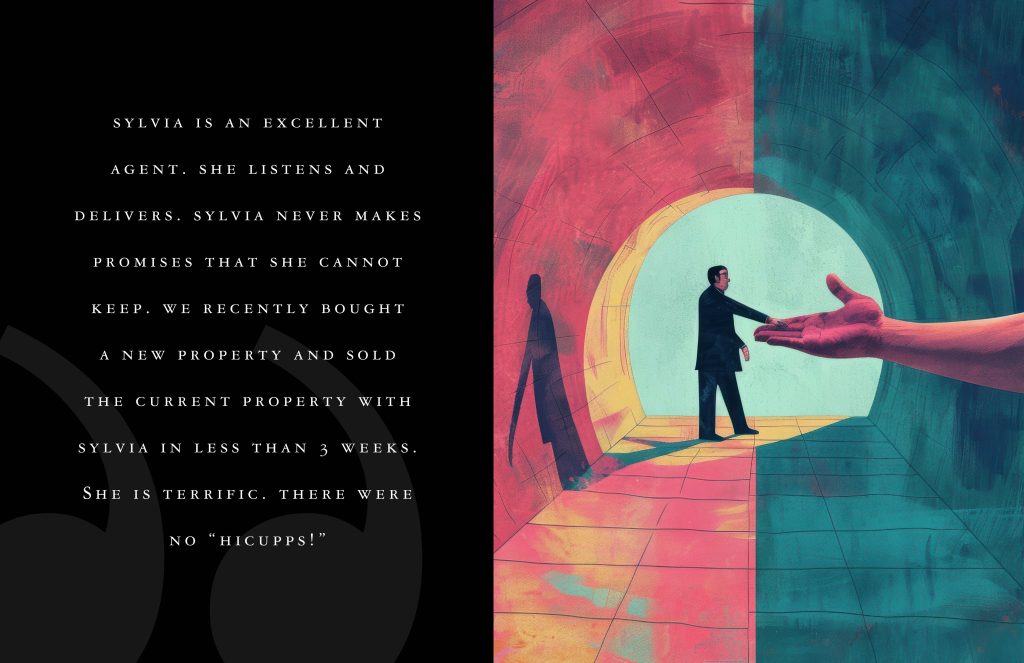
I personally liked this but the design was too artsy. Meaning if someone didn’t like this look, they might be turned off from the entire piece.

Visually cool but the look I think was too limiting as an entire concept.

We came up with “Every Story is a Journey”, which we trademarked for real estate.

The gears of an estate transaction are super complex. You have an incredible number of variables and moving parts. First, every home is different. People in the transaction both on the buy and sell side have their own unique personalities and perspective. Add in mortgage brokers, insurance brokers, appraisers, inspectors, real estate agents, lawyers, title closers, deadlines, and emotional stress. So, the drawing we created with gears represents all the moving parts of a real estate transaction.

We then took characters we created (going back – if I didn’t put you to sleep when discussing “Everybody Reads This”) and interjected them in the design. A Realtor needs to know about various communities. Golf. Equestrian. Pickleball. The area. You are baking cookies at an open house. Marketing materials. Photography. Video. Sometimes the Realtor is vacuuming the home. Skimming the pool. The phone goes dead. The characters we used in that earlier piece were now interjected. If you scroll through the pages of the book, you’ll find a number of Easter Eggs that relate to South Florida Click here to scroll through.
We inserted 6 basic chapters as our elevator pitch so you could follow along.
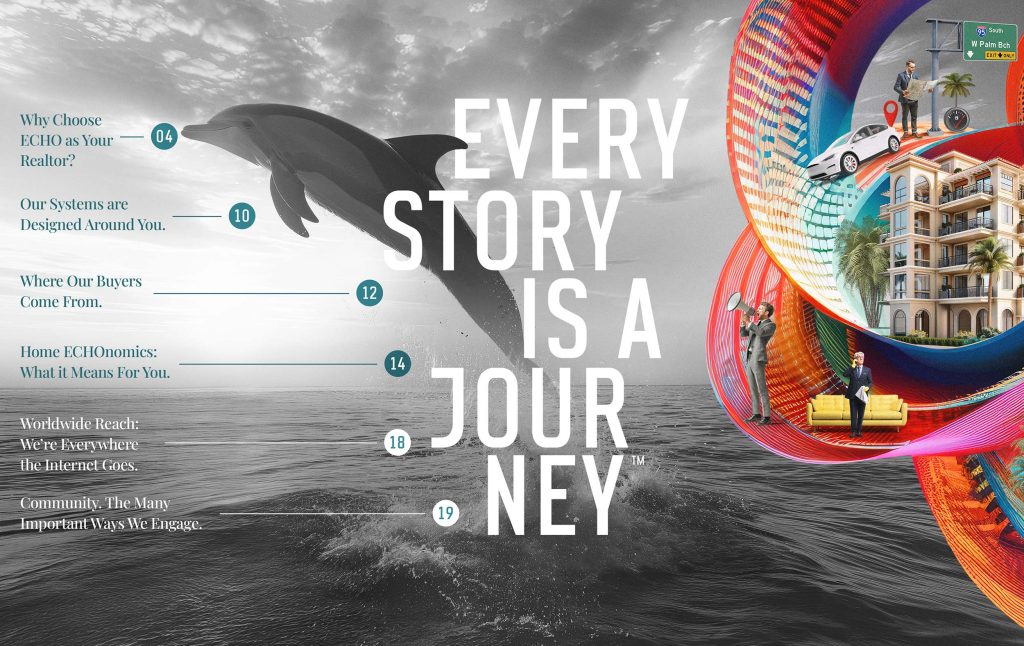
Our top designer in the textile business never made an exact copy of the hero pattern in the companion coordinate. Instead of matchy-matchy (boring exact replication) she called upon having some variation, matchy-poo (our inside jargon). You also see elements of the four other concepts not chosen either interjected or inserted as stand-alone concepts within the 28-page book created. But they work together. You also see the gears are present at various times of the book and in various pages we created. This developed over 5-6 different versions to keep continuity and look present. Understanding matchy-poo was something I learned in the textile industry thirty years ago – and I was able to understand this and not be afraid of it because of those prior creative building blocks.
As we came to completion on the project, natural extensions started to emerge. Could we bring the characters and concepts to life? About 80% of the character work was created with AI. The rest was traditional Photoshop. Good AI as opposed to AI Slop is a lot of work. For some characters there were up to 100 spin-offs created. Then putting them together artfully was a bear.
The extension that was unexpected was taking out Sargent Pepper characters and turning them into life. Taking each one and storyboarding social media video and even commercial campaigns is all under way.

A novel example of how a basic civilizational advancement was considered cheating and initially rejected.
When Jeff asked me for my insights regarding this project I was in the middle of my morning workout while listening to a YouTube podcast that dealt with the history of Refrigeration.
Less than 200 years ago, you couldn’t just freeze water at will – the technology didn’t exist. Ice was a phenomena that had to occur naturally or not at all. Think about how mind-blowing it is that generations of people living in the tropics never encountered something so basic as frozen water.
Eventually an industrious person came along and figured out how to preserve ice long enough to transport it to new far-off lands and he was hailed as a hero and everyone lived happily ever after…
No, not really.
Something so critical to civilizational development as frozen water was not immediately embraced.
Why not? Because it was cheating. Man can’t just make ice, only nature is allowed to freeze water. Food preservation and medical treatments be darned. Everything that comes from this abomination is fruit from the poisoned tree. Reminder – this was a mere 200 (not 2,000) years ago.
Ponder the absurdity of having to come up with a sales pitch for ice.
Those of us that embrace emerging technologies have to battle the stigma of cheating. “AI Slop” is the buzzword du jour right now. People hear “AI” and they immediately recoil and tune you out. But rather than designing to appease the status quo, history (and 20 years of making a living as a commercial designer) has taught me to never to apologize for finding new ways to deliver a better product to my stakeholders.
There is no AI Slop, just sloppy people.
On a lower level, AI made things much easier. On a higher level, it made things far more challenging as it raised expectations and created a mandate to elevate the paradigm of visual storytelling for marketing.
Your belief in your ideas and artistry will be put to the test by luddites and hecklers, now more than ever.
An artist’s confidence is sacrosanct. But you have to fight for and defend your confidence – it’s not given. Confidence isn’t real if it’s never been tested.
The challenge is to be steadfast in your belief that art will always be art regardless of the tools the artist chooses to use.
Today’s “Good Old Fashion Way” was yesterday’s Easy Button.
It’s all cheating. Graphic Design was not invented with the computer or even electricity. It existed long before that, and who decides at which point in the timeline something can be considered the honest traditional way or cheating? There was a time when using a computer was cheating. There was a time when Photoshop 1.0 (with no layers – those came later) was cheating.

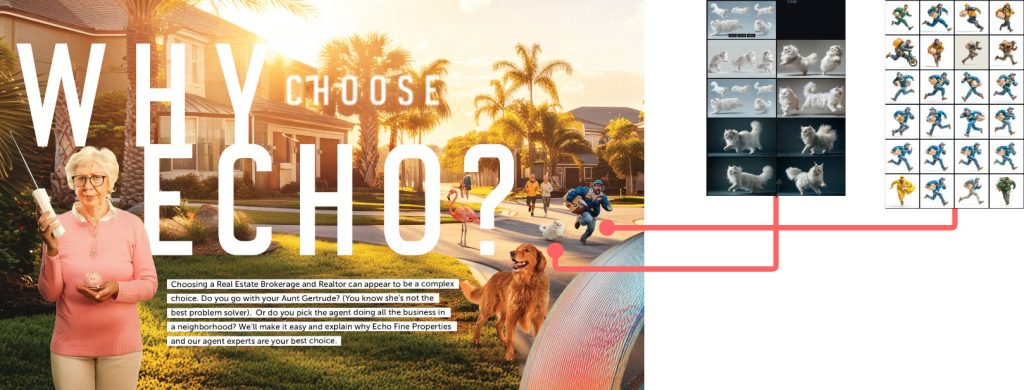
A handful of prompts didn’t produce the art behind the concept.
I would estimate at least 1500 individual prompts spread across 3 leading Image generators. Some did things better than others. It took a human to understand each one’s strengths and limitations.
The success yield was somewhere around 20%.
The individual elements were generated via AI, but composition was 100% “traditional”. I say traditional mockingly, because what even is traditional.
The broader point is that a guided human hand was still needed to get the orchestra to harmonize.
From a business standpoint, AI allowed us to do something that generic stock images could never do – create very specific assets that spoke directly to our demographic. Palm Beach Realtors doing things that Palm Beach Realtors do. From there we were able to use those assets to compose visually engaging scenarios that would resonate with the local community. A Palm Beach adventure through and through.
To that point, I’m reminded of our Art Director from the textile business. Everything was original but was taken from something. She didn’t look at what our competitors were doing but did get inspiration from color, old world documents from the 18th or 19th century in the public domain or commissioned modern drawings. Putting elements together is what is key. AI sloppy people are just sloppy. Someone recently sent me a letter with {Insert Company Name}. AI sloppy. We are noticing that in a lot of marketing. Tons of AI generated content but no purpose to it. The AI might appear cool, but did the Creative just use AI to regurgite the same duplicate substance that was previously produced? An endless loop with a drastic loss of new creations? My hunch is we will see a lot of AI ads that look “wow” but poorly messaged, starting tonight with the Super Bowl. As far as my Jeff Journals, I’ve never used AI to create creative material. It’s of no use because AI doesn’t know my history, stories, & perspective well enough. It loses my voice and personality even though it does get my intnetion. The outut is blah. But in the future, who knows?
We created a book and power point to explain the listing and purchasing process for clients. There is a lot going on in the first set of gears because the process is super complicated. By the time you reach the end, the girl on the bike is representing the family who just found their dream home and the process is unwinding. End of the story and our journey. And finding the perfect home is a happy ending, indeed.
The website homepage, “About Us”, and “How We Do It” pages were updated. Social Media video campaigns have been created.
The creative process takes you wherever it goes. There has to be a purpose for it. It has to be eye-catching and memorable. It must be 5 steps out of the box. Discover, learn, and adapt as you go. Mix different Creatives together for collaboration. Listen to the client and your team but never over involve them. Have conviction to keep working until you get it right.
Disclaimer #5 – One master Creative I work with says to start each project with writing, “Nobody Cares”. I hope you found this interesting. But if not, I wrote this one for myself as the journey in creating this was the same as seeing that exploding White Sox scoreboard for the first time. And if I did bore you, at least you missed whatever the political talking heads were rattling on about this morning.
There – now I don’t feel so bad.


Jeff Lichtenstein, originally from Chicago, got his start in the home furnishings textile business where he traveled over 35 weeks a year selling fabrics. After the family business was sold, Jeff moved to Florida and became a real estate agent. Today he is the owner and broker of Echo Fine Properties, a luxury residential brokerage voted best brokerage of the year. Jeff manages a non-traditional model of real estate that mimics a traditional business model. Echo has 100 agents, an average of one million dollars per transaction and over 500 million in annual sales. Between traveling for work and annual family trips to national parks with his wife and 2 now adult children, Jeff has visited 49 states. He is also one of the few Chicago White Sox fans you’ll ever meet. Some publications he has been quoted in.
Author of business & leadership book How Making a Sandwich Can Change Your World – The Amazing Success of the PB&J Strategy – Available to Buy Now!
Feel free to ask him a question directly at [email protected] including a complementary valuation of your home.














or Create your MyHomes account today?

In only 30 seconds you will have full access to property, community info and SOLD data you can't get anywhere else.